

Between Aid and Justice
A Nakba Descendant’s Case for Decolonising Humanitarianism - by Ayda Issa

As we mark seventy-eight years since the mass displacement of Palestinians in 1948, the enduring condition of exile compels us to ask why millions of refugees remain denied return, restitution, and political resolution.
The persistence of this condition reflects the limits of a global humanitarian system that manages suffering while protecting the structures that produce it. To decolonise humanitarian intervention, we must first fundamentally rethink the histories, logics, and power relations that sustain humanitarianism itself.

Modern humanitarianism developed alongside European imperial expansion and was shaped by religious, moral, and political forces. Its early roots were in Christian missionary work, which linked helping suffering populations with “moral” reform and religious-cultural conversion. In the late eighteenth and nineteenth centuries, abolitionist movements strengthened humanitarian ideas by drawing attention to distant suffering and framing intervention as moral duty, while still operating within racial hierarchies that determined who was humanised and deserving of protection.These ideas were also absorbed into imperial governance, where humanitarian language justified colonial rule through “civilising” missions and the “protection” of colonised peoples. Over time, these ideas became part of international institutions and legal systems, embedding humanitarianism within global inequality and imperial power.
Humanitarian systems are typically controlled by organisations in the Global North, while aid recipients are situated in the Global South, producing a familiar colonial dynamic. Donors determine priorities and aid agencies define needs, stripping aid recipients of autonomy through externally imposed decision-making structures. Humanitarian assistance is delivered through pre-determined categories of need and eligibility criteria, and short-term emergency frameworks that leave little room for suffering communities to define their own priorities or political demands. In this process, suffering populations are governed and managed rather than enabled as political agents.
Even when presented as neutral and moral, humanitarianism reinforces Western imperial power by obscuring the political conditions that produce crises and sustain unequal power relations through dependency rather than self-determination.
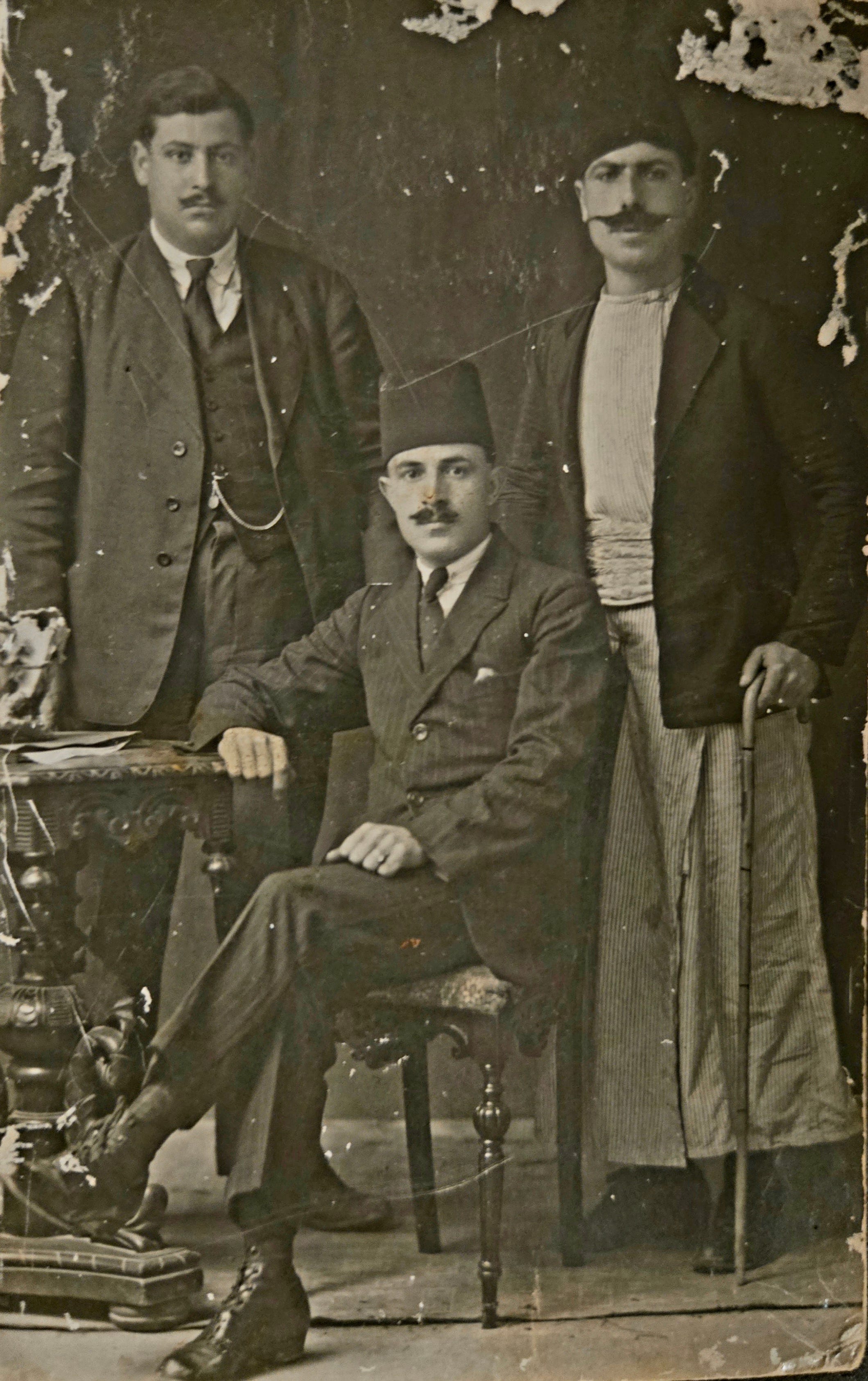
In settler-colonial contexts such as Australia, these dynamics were further embedded in colonial governance. Humanitarian practices coexisted with and legitimised the violent seizure of Indigenous land. Rather than challenging colonial expansion, humanitarianism operated within its moral framework, offering limited forms of redress while leaving structures of Indigenous dispossession intact.
A historical lens reveals the depth of these contradictions. In nineteenth-century Britain and its settler-colonies, humanitarian discourse developed around the concept of “compensation” for Indigenous dispossession. While this language acknowledged violence and loss, it translated demands for restitution into manageable colonial terms. Nonetheless, compensation was deeply ambivalent as it remained shaped by paternalism and racial hierarchy, often tied to “civilising” missions that denied Indigenous sovereignty. It functioned less as a pathway to justice and more as a mechanism of moral management, allowing settler-colonial societies to acknowledge harm without transforming the structures that produced it.
This ambivalence is particularly pronounced in colonial Australia, where evangelical Christianity shaped humanitarian approaches to First Nations peoples. Indigenous populations were increasingly framed as subjects in need of spiritual salvation and moral reform rather than sovereign peoples with inherent rights to land and self-determination. Within this framework, ideas of charity and redemption were mobilised to legitimize intervention into Indigenous life, while excluding any meaningful restitution for genocide and violent dispossession.

Institutions such as the Aborigines Protection Board exemplify this logic. Established under the guise of humanitarian concern, these bodies oversaw regimes of control that regulated where First Nations people could live, work, and whom they could marry. Missions and reserves, often run by churches, became key sites where humanitarian and religious logics converged. While framed as spaces of protection and care, they functioned as instruments of surveillance, discipline, and cultural erasure. Practices such as the forced removal of children, now known as the Stolen Generations, were justified through humanitarian language that cast assimilation as being in the best interests of First Nations people.
In this context, “compensation” took the form of conditional welfare, rearticulated through paternalistic provisions including rations, shelter and religious instruction contingent upon compliance with colonial norms. Material support was tied to “proper” behaviour or moral conformity. First Nations peoples were both forced and coerced into abandoning their languages, cultural practices, and relationships to Country in exchange for limited protection and basic subsistence. Rather than addressing dispossession, “compensation” became a mechanism for managing its consequences.
By the late nineteenth and early twentieth centuries, this framework was solidified into formal policies of protection and assimilation. Early humanitarian acknowledgements of First Nations suffering were absorbed into bureaucratic systems of control, rather than translated into structural redress. What persists today is a deeply entrenched pattern in which settler-colonial governance may recognise harm and express remorse when convenient, while continuing to deny land rights, political autonomy, and meaningful restitution. This legacy continues to shape contemporary debates in Australia, where the gap between symbolic recognition and structural justice remains unresolved.
These dynamics persist in contemporary humanitarianism, particularly in relation to Palestinian displacement. Following the Nakba, humanitarian aid became the dominant international response. Early interventions briefly centred return and restitution. Notably, Folke Bernadotte, appointed by the United Nations in 1948, argued that Palestinian refugees had an inalienable right to return to their homes and recover their property. He argued that return was the central condition for lasting peace and justice. However, proposals for return were rejected as Israeli leadership framed return as a security threat and as incompatible with the ethno-political goals of the new state. This was followed by the assassination of Folke Bernadotte on 17 September 1948 in Jerusalem, carried out by members of the Zionist Lehi (Stern Gang), which marked a turning point in the trajectory of the international response.
In the aftermath, the United Nations shifted away from enforcing return, institutionalising humanitarian aid through agencies such as United Nations Relief and Works Agency for Palestine Refugees in the Near East (UNRWA). While they provided essential services, they also transformed Palestinian displacement into a prolonged humanitarian condition, where survival is sustained but political resolution is deferred. Refugee camps, initially intended to be temporary, became permanent infrastructures of life without return.
This shift from return to aid fundamentally reshaped the Palestinian condition. Displacement was reframed as a humanitarian crisis rather than a political injustice rooted in settler-colonialism. The category of the Palestinian refugee is rooted in violent dispossession and denationalisation, yet this reality has been systematically depoliticised and neutralised. Humanitarian frameworks reinforced this condition by managing refugees through aid systems that prioritise survival while marginalising claims to return, sovereignty and restitution.
Humanitarianism operates as a form of governance. It structures how populations are seen, classified, and managed through legal categories, bureaucratic systems, and representations of suffering. As Didier Fassin argues, humanitarianism produces a “politics of life,” in which value is assigned through vulnerability rather than inherent rights. Similarly, Miriam Ticktin shows how humanitarian systems focus on exceptional suffering, offering selective care while leaving structural inequalities intact. In the Palestinian case, Ilana Feldman demonstrates how long-term humanitarian administration normalises indefinite refuge, converting a political struggle into administrative management.
Rather than recognising refugees as political subjects, humanitarian discourse reduces them to recipients of care, producing depoliticised images of suffering that obscure the structural violence behind it. Humanitarianism does not merely respond to crises but actively shapes how people are perceived and treated, defining refugees through need and vulnerability rather than as political actors with rights.

The paradox between humanitarianism and return is therefore central. By prioritising aid over restitution, international responses maintain displacement rather than resolve it. Palestinian refugees are sustained within systems that manage life without restoring rights. Humanitarianism and settler colonialism thus operate in tandem: one produces and maintains dispossession, while the other regulates the ongoing consequences.
Yet Palestinian claims to return go beyond these frameworks. Return is not only a legal or political demand, but also a form of decolonial refusal. It challenges humanitarian governance by rejecting the idea that justice can be achieved through aid alone. As Noura Erakat argues, Palestinians confront a condition of “juridical erasure,” in which legal recognition is systematically separated from material restitution. Within this context, return becomes a radical reimagining of sovereignty enacted through collective practice rather than state-granted status.
This reimagining is already enacted in refugee camps and across the diaspora. Everyday practices of memory, endurance, and community sustain connections to land and assert forms of belonging that exceed imposed categories of refugeehood. These spaces are not merely sites of enforced waiting, passivity, or victimhood; they are also sites of political life that expose the limits of both humanitarianism and settler-colonial governance.
Between aid and justice, decolonising humanitarianism requires confronting its historical entanglement with colonial power. It also requires moving beyond models of managed repair toward forms of justice that address the root causes of dispossession. From nineteenth-century compensation schemes to contemporary aid regimes, the dominant pattern has been moral recognition without restitution. Breaking this pattern requires centring return for Palestinians, or Land Back for First Nations peoples, as concrete political and material processes.
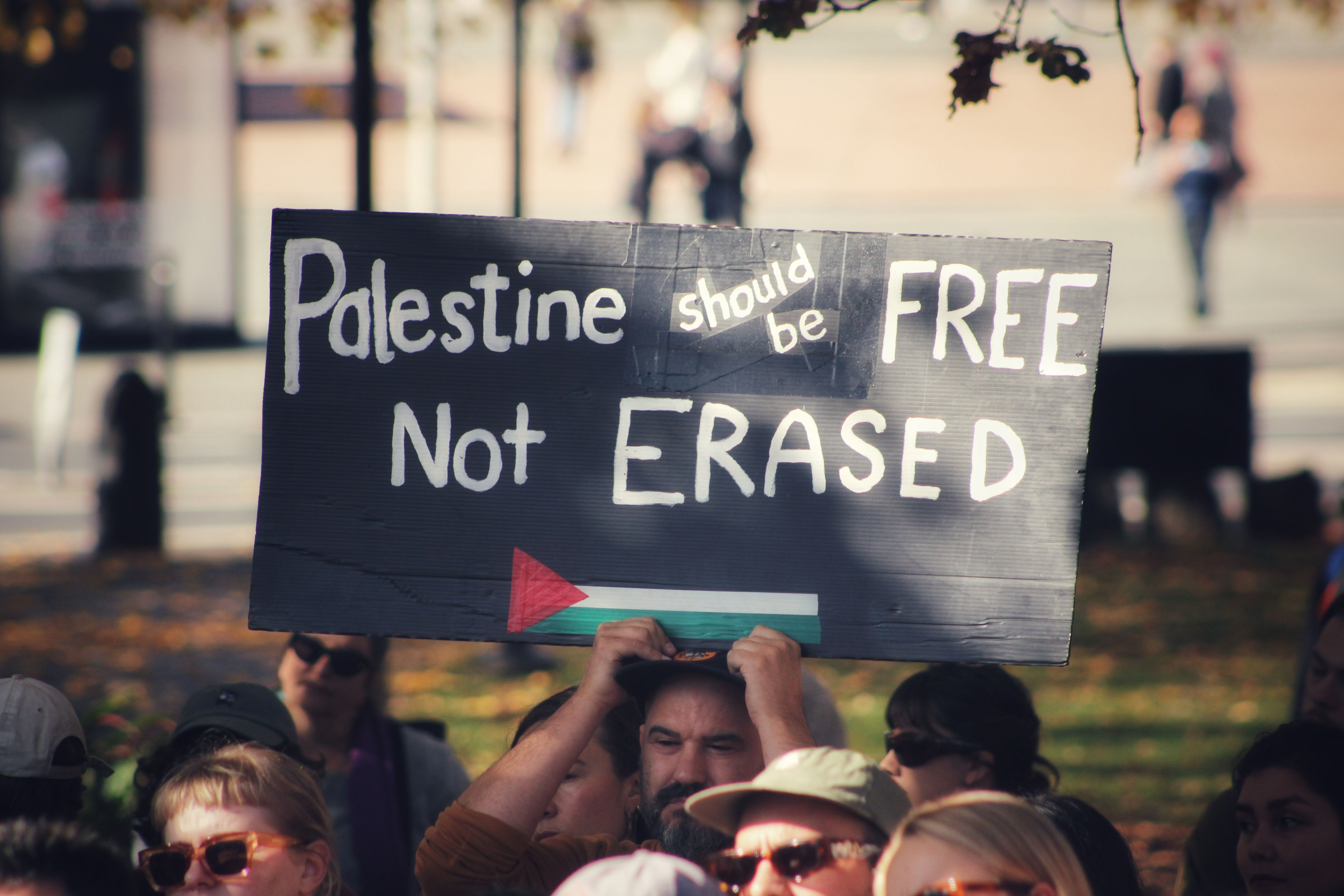
Ultimately, the question of Palestine forces a broader reckoning with the limits of humanitarianism itself. What would it mean to no longer treat the dispossessed as objects of care, but as subjects of justice? Palestinian return gestures toward an answer. It refuses the containment of justice within humanitarian frameworks and insists instead on a future in which dispossession is not managed, but undone. Meanwhile, each passing anniversary of the Nakba underscores the ongoing absence of meaningful reparation.
Case Study: Flotilla Missions and the Limits of Humanitarian “Aid”
Flotilla missions to Gaza can be read as a case study that exposes a key paradox in humanitarianism: the gap between aid as a moral response to suffering and justice as a political question. Rather than standing outside systems of power, these flotillas are shaped by the same imperial and colonial structures that govern Palestinian life, movement, and access.
Flotillas emerged in response to the blockade of Gaza, which is not simply a restriction on entry but a wider system of control over borders, sea routes, and the movement of goods and people. It operates through the regulation of everyday life via the management of circulation itself. The flotilla, in attempting to cross this controlled space, does not exist outside the system it confronts; instead, it becomes legible only through the very conditions of control that produce it.
When flotillas are intercepted, it becomes clear that humanitarian access is not automatic or neutral. Aid doesn’t move freely as a right; it moves only when it is permitted by the power enforcing the blockade. Therefore, exposing how humanitarianism doesn’t sit outside political control. It often ends up working within it, managing suffering without changing the conditions that produce it. This is part of what scholars like Didier Fassin describe as the politics of humanitarian reason.
Flotillas expose the systems that govern both movement and legitimacy. The same actors delivering aid can be redefined as security threats depending on how their actions are framed. Established humanitarian organisations are typically permitted to operate within official channels, while more direct or unsanctioned forms of solidarity are rendered disruptive or illegitimate. What counts as “acceptable aid” is therefore already structured by power.
Meanwhile, flotillas sit within a broader global media pattern where Palestinian life becomes visible mainly through moments of crisis. Attention spikes around intervention and emergency, but then fades without any real shift in the underlying situation. In that cycle, blockade produces humanitarian response, response produces visibility, and visibility rarely translates into structural change.
Flotilla missions act as a limit case for liberal humanitarianism. They show the contradiction between universal claims about saving lives and the reality that access, movement, and protection are still governed by unequal power. The gap between humanitarian language and political control is structurally embedded in how the system works.
Bibliography:
Fassin, D. (2007). Humanitarianism as a politics of life. Public Culture, 19(3), 499–520. https://doi.org/10.1215/08992363-2007-007
Fassin, D. (2011). Humanitarian reason: A moral history of the present. University of California Press. https://doi.org/10.1525/california/9780520271166.001.0001
Erakat, N. (2020). Justice for some: Law and the question of Palestine. Stanford University Press. https://doi.org/10.1515/9781503608832
Feldman, I. (2012). The humanitarian condition: Palestinian refugees and the politics of living. Humanity: An International Journal of Human Rights, Humanitarianism, and Development, 3(2), 155–172. https://doi.org/10.1353/hum.2012.0017
Feldman, I. (2018). Life lived in relief: Humanitarian predicaments and Palestinian refugee politics. University of California Press. https://doi.org/10.1525/california/9780520299627.001.0001
O’Brien, A. (2011). Humanitarianism and reparation in colonial Australia. Journal of Colonialism and Colonial History, 12(2). https://doi.org/10.1353/cch.2011.0016