

Against Price
The philosophical underpinnings of prices


I was recently watching a CJ the X video/podcast/show - DATA BREACH. In this video Prof. C. Thi Nguyen and CJ explore the philosophy of game design. It’s interaction between authoritarianism and freedom, between love and domination, between metrics and value and so much more. It’s definitely worth a watch/listen!
I was really enjoying their conversation and then something they said really struck me:
“One of the really interesting things about value capture, …, is you lose your ability to do the trade-off. [Because] you’ve forgotten that there’s something more important outside the metric.”
Now this was in the context of the difference between the function of metrics in games, and metrics in institutions like universities. However, it immediately made me think of metrics in economics, Things like gross domestic product (GDP), the unemployment rate, or maybe most notoriously, price.
Price can be thought of as a metric in a few different ways. It can be a metric for exchange i.e. Homer can exchange $20 for many peanuts. However, it can also be thought of as a metric for wealth i.e. someone with a billion dollars is a parasite. Oh oops, I mean a billionaire. These representations of price are using money as a unit. However, price can also be represented in non-monetary units. For example, people tend to refer to people in prison as “paying the price” for their supposed crimes. Or, if someone engages in a social taboo, they can “pay the price” by being socially ostracised. There is no money involved in these scenarios, rather the price is represented through the unit of time or social exclusion respectively.
Now this is interesting and all, but I’m no philosopher. I’m not going to make some incredible insight into the epistemology of price. However, I do know what economists think prices are. Within the metrics-value framework explore in their talk, Prof. C. Thi Nguyen and CJ brush up against some really interesting insights into how our use of price as a metric creates the incentives and institutions that uphold oppression and domination.
What do economists think prices are?
Oh boy, are you ready for another really boring explanation of supply and demand?! I hope not, because that’s not what you’re getting. Instead let’s explore the philosophical underpinnings of what a “price” represents. Economists propose that prices represent the underlying value of a good/service that take into account multiple dimensions of production and consumption.
To make that confusing sentence a little bit simpler, a price reflects all of the costs of production such as labour, land, capital, time, risk, transportation, injury, exploitation, extraction, fossil fuels and much more that go into producing a good/service, and squishes all these inputs into a single number. Now, that’s the production side. On the consumption side, a price reflects all the preferences, options for substitute goods/services, cultural relations to goods/services, community needs, physiological perceptions of needs, physiological perceptions of wants, risk aversion and much more of an individual/group, and squishes those into a single number. To simplify this further once more, prices squish the complexity of human production and exchange into a single number. A scalar that flattens the complexity of reality.
For example, the value of coffee isn’t the soil microbiome where the coffee tree is planet; the nitrogen, phosphorous and potassium needed to help the tree produce beans; the farmer’s labour to harvest and process the beans; the transportation of those processed beans; the labour that goes into the roasting process or the barista that finally uses those bans to make a coffee (don’t even get me started on the milk that might be in that coffee). No none of that is the value of a coffee. The value of coffee is the price. It’s the $5, $6, $7 or whatever dollar amount you pay at your local cafe.
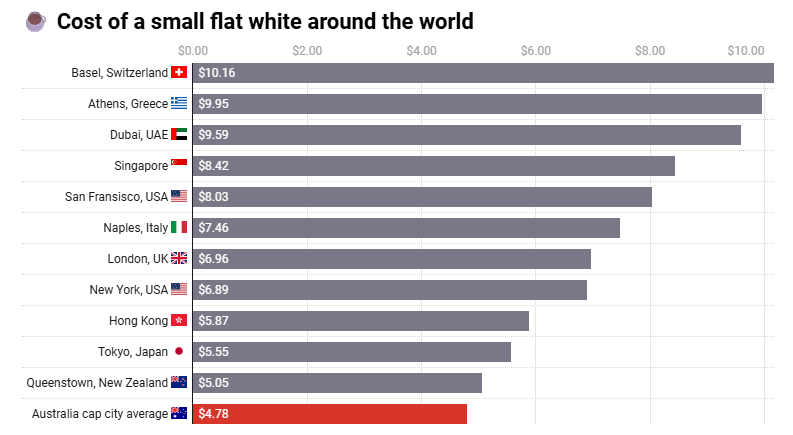
Economists assert that this scalar metric of price, is an accurate (or at least approximate) representation of the value of all the inputs that go into that final coffee. All those inputs used to produce the coffee, and all of those preferences that people have for coffee, represent the value of that coffee as a single number, a price. That is quite a strong philosophical position to take. I wonder how economists support this assertion?
The philosophical underpinnings and implications of price
Prices are underpinned by the philosophy of Utilitarianism. Under this philosophy, consumers are utility maximisers. Consumers will make interactions/transactions with producers. These producers maximise their profit. Producers can only maximise their profit when they can sell goods/services to consumers at a price that maximises that consumers utility. Crucially, this framework requires some underlying unit of measure for utility, a frame of reference. This underlying unit needs to simplify all the complexities of both the consumers needs/wants, and the costs of production, such that there is a friction-less transaction between consumers and produces. This is the role prices play.
This philosophy allows economists to adopt prices as a metric for value. If someone is willing to pay a certain price, and are a utility maximiser, well then they must “value” that good/service in proportion to the magnitude of the price they want to pay for it. This is where the notion of markets being Pareto optimal comes from i.e. no one will agree to an exchange that makes them worse off. Therefore, for two (or more) people to make an exchange, they need prices to compare their personalised “values” for that good/service being exchanged. Otherwise, they have no means of comparing their respective value of the good/service.
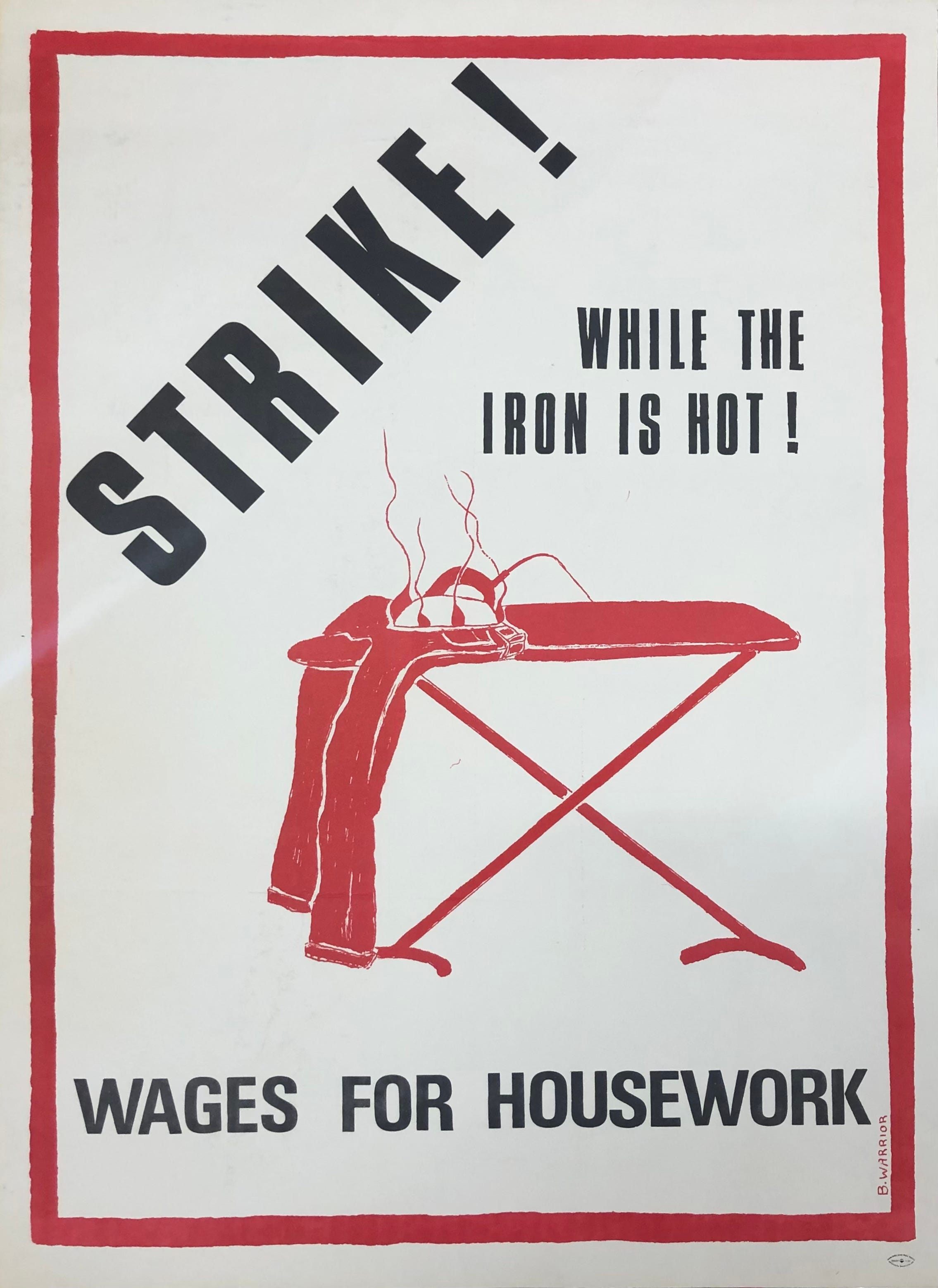
Think about what this actually means. It follows that if anything doesn’t have a price, then it must have no value. This means that all of the open source products that are free to use like Wikipedia, Python, Linux, git and so much more (a lot of which multinational corporations use to create the products they sell back to us) - is not of any value because it doesn’t have a price. Similarly, the large majority of caring and reproductive labour that goes unpaid has no value because it has no price (despite this labour literally holding up the entire economy and society).
Furthermore, the above framework implies that so long as the price of two different goods/services is identical, then they are of the same “value”. Within this framework, we can make the following comparisons:
The bombs and missiles that costs the US $11.3B in the first 6 days of their war in Iran, that killed 156 people (120 of whom were children), is the same “value” as $11.3B dollars worth of healthcare, housing or education.
If your job earns more than you can save by taking care of your child yourself, then your job is more “valuable” than providing that care for your child. In this case you should just pay someone else to take care of your child (usually by exploiting global supply chains of care).
If the value a native endangered animal brings to the economy (as measured by a price) is less than the price of the wood that can be sold by cutting down its native habitat, then we should let that animal go extinct.
A human life is (statistically) worth $5.87M according to the department of the Prime Minister and Cabinet.

Within this framework, because price represents value, all of the disparate examples above can be compared in price to determine their “value”, despite the obvious inconsistency’ with basic morality. Hopefully the contradictions of price as a metric are starting to become a bit more clear.
The function of price as a metric actually reminds me of how James C. Scott frames states requiring a process of “legibility” to interface with its subjects. This process of legibility simplifies the complexities of human social structures into a form that a state can interpret i.e. the introduction of surnames to easily keep track of citizens, or subdividing land into discrete blocks such that taxes can be more easily levied against standardised lots. States require legible metrics to interface with humans. Prices are the metric that allow markets to make legible the highly complex interactions between human beings. Without prices that truly represent “value”, markets are incapable of meeting the needs that people actually value.
This is likely the point that an economist would bring up the concept of externalities. Basically, impacts on a third party that is not party to the original transaction, yet are still impacted as a result of that transaction nonetheless. This argument proposes that if you can just “price in” (usually via a tax) the impact of externalities into the original price of the transaction, then prices can still represent the true value of those goods/services being transacted. However, to me at least, this starts to feel like a tautology. To incorporate the value of externalities, we now have to derive a new price than can account for the impacts of the damages that were not part of the original transaction (i.e. no market has priced them). We then add this new estimated price to the original price to explain the “true value” of that transaction, which itself uses the metric of price to represent value. Is that not circular?
What is to be done with prices?
As a nerd who loves data, I am not so certain that getting rid of metrics altogether is the Utopian solution it might initially seem. In fact, CJ and Prof. C. Thi Nguyen sarcastically joke about this in their chat:
“stop measuring everything, … it’s going to be so beautiful.”
Prof. C. Thi Nguyen points out in the talk, metrics can offer material improvements to all of humanity. For example, research into vaccines that utilised metrics to test their efficacy, has likely saved at least 154 million lives in the past 50 years! Metrics have also allowed us to both outline and quantify various systems of oppression such as gender, racial, colonial, class and disability oppression. Metrics have a place and function. The question is less about the metrics in and of themselves, but rather how the metrics that are imposed upon us skew the way we create value.
If we only focus on price as a metric for all of our abstract human values, then we are likely to only perceive these values through the utilitarian zero-sum philosophy that underpins prices. Other epistemological and teleological frameworks are sideline in favour of utilitarian prices.
This makes me (as well as CJ and Prof. Thi Nguyen) think of Goodhart’s Law:
“When a measure becomes a target, it ceases to be a good measure.”
Because prices are framed as the measure of value, prices are also the target for value. People often have a goal to buy a house, yet prices are constantly growing such that they now represent a financial asset instead of being valued as a place to live. GDP (a measure of aggregate prices) is constantly growing to feed the insatiable logic of capital accumulation, despite the share of this income going to labour continuing to fall. Stock prices are always at always at an “all time high” despite the existential risk of climate change, various financial crises or US imperialism.
Despite all the “growth” of these various prices, we are becoming a more unequal society. I would hazard a guess that one (of many) reasons for this inequality, is the framing of prices as a target for value and prosperity. In fact, David Graeber has made a similar point that companies that benefit from higher prices (and in turn high profits), are also subject to the same market structures that require them to make the most profits. This is because price is perceived as the underlying metric of value by shareholders. Higher prices, means higher profits, means more value (similar to Marx’s M → C → M’ circuit of money capital process):
The essential problem with price as a metric for value, is that prices boil down to a utilitarian view of the world disguised as an objective measure of value. They appear as hard logical numbers. Unchallenged. Yet underneath prices is all the complexity of subjective human experiences that have been squished into a single number. This is in spite of the utilitarian theory underpinning this number being highly sensitive to the functional form the utility function adopts. It is a number that maximises a nebulous and unobservable metric known as utility, and maximises profits for those who control the means of production.
I am highly suspect that anyone actually values utility (let alone knows what a util is). I find it challenging to believe there is a single quantitative metric that represents “value” for human beings in a highly generalisable way. Value is certainly not profit. Value is (probably) a complex, emergent phenomenon, existing in a high dimensional space that is not easily interpretable without a significant amount of shared historical, social and cultural context. Value in one place or time, might not be value in another place or time i.e. by way of a silly example, vegemite in so-called Australia is valued more than marmite, yet in the UK this is flipped.
Although prices are not value, I can see an argument for prices in some specific scenarios where a “price” can be helpful to quickly “gauge” the value of an object. For example, in their book Debt, Graeber talks about how early versions of money were helpful in scenarios involving long distance exchanges i.e. when people wanted to trade with someone they might never see again. A simple standardised “price” in this scenario can be a helpful marker for the perceived value of an object. Yet it is not value itself.
I am not sure what should or could replace prices as a metric for value. At a broader societal/international level, something like Doughnut Economics offers a multidimensional alternative metric that might be a nice starting point to ensure a socially and ecologically just economy. Yet at a more local level where the complexities of history, society and culture do not need to be flattened into a simplified metric, more qualitative measures of value like mutual aid, free association, reciprocity, access to common resources, social and ecological diversity, community and personal fulfilment as well as happiness seem like better measures of value to me.
I don’t suspect that you my dear reader, ask your family for a dollar amount when you spend time together, right? If someone important in your life needs care, do you charge them for that care? I hope not. When you spend time with your friends, do you send them an invoice with a 14 day billing period?
When it comes to describe the sorts of things everyday people truly value, prices fall hopelessly short as a metric.
 | A guest post by
|